
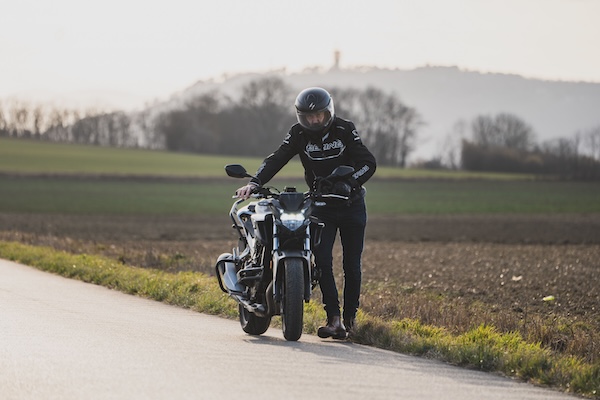
Few things are more satisfying than diagnosing and fixing a motorcycle problem yourself. A properly…
Media post: What Actually Happens to a Car When It Sits Outside Every Day?

For many drivers, parking outside is simply part of owning a car. Garages are not always available, apartment parking may be uncovered, and even homeowners with garages often use them for storage, tools, or another vehicle.
A car can obviously handle being outdoors. That is what it was designed for. But there is a difference between driving through rain or sunshine and leaving a vehicle exposed to the same environment day after day.
For owners who keep their cars for several years, understanding that difference can help prevent some avoidable wear.
Sunlight Is More Than a Summer Problem
People often associate sun damage with extremely hot climates such as Arizona, Nevada, Texas or Southern California. In reality, a vehicle parked outside receives UV exposure throughout the year.
Modern automotive paint is designed to withstand outdoor conditions, but prolonged exposure can still contribute to gradual aging of exterior surfaces. Trim, rubber seals, headlights, dashboards, and interior materials are also continuously exposed whenever a vehicle sits uncovered.
Heat adds another dimension. A closed car sitting in direct sunlight can become substantially hotter than the surrounding air, placing additional stress on interior surfaces.
This does not mean a car parked outdoors for a few afternoons will suddenly show visible damage. The issue is cumulative exposure over months and years.
Shade can help, but where that shade comes from matters.
Parking Under a Tree Has Its Own Trade-Offs
The shady spot underneath a large tree can seem like the obvious alternative to parking in direct sunlight.
It may reduce direct sun exposure, but trees introduce a different set of problems.
Sap, pollen, leaves, seeds, bird droppings, and small branches can all end up on the vehicle. Some contaminants are simply annoying. Others become harder to remove when they remain on the paint or bake onto the surface in warm weather.
Tree cover can also mean that a car stays damp longer after rain because less direct sunlight and airflow reach the surface.
For that reason, the best outdoor parking spot is not always simply the shadiest one. Owners should consider what is above the vehicle as well as how much sunlight reaches it.
Dirt and Dust Are More Than Cosmetic
A dusty car usually looks like a cleaning problem rather than a protection problem.
The bigger issue is what happens next.
Fine dust, pollen, and road debris can accumulate on the exterior while a vehicle is parked. If the surface is then wiped down while dry, the particles can be dragged across the finish.
This is one reason careful washing technique matters. Trying to quickly remove a layer of outdoor dust with a dry towel may do more harm than simply leaving the car dirty until it can be properly washed.
The same principle applies when using a vehicle cover. Both the car and the inside surface of the cover should be reasonably clean. Putting a dirty cover onto a dirty vehicle and allowing it to move in the wind is not a good approach to paint protection.
Rain, Snow, and Hail Create Different Problems
Owners shopping for outdoor protection naturally focus on whether something is waterproof.
That matters, but rain is only one type of weather an outdoor vehicle may encounter.
Snow and ice bring their own challenges. Moisture can remain against exterior surfaces for long periods, and repeated freezing and thawing can make ice, dirt, and other contaminants more difficult to remove.
Hail presents a different problem because it involves impact rather than simply moisture. A vehicle cover may provide some cushioning against minor weather and small debris, but owners should not assume that a fabric cover will protect a vehicle from severe hail. When significant hail or damaging storms are forecast, covered parking remains the safer option whenever it is available.
An outdoor vehicle can therefore face changing combinations of rain, snow, ice, humidity, condensation, wind, heat, dust, sunlight, and occasional severe weather. Whatever is placed over the car needs to deal with moisture without unnecessarily trapping it against the vehicle.
Fit matters as well.
A cover that is far too loose may move excessively during windy conditions. One that is difficult to install may simply end up sitting unused in the trunk or garage.
For an owner considering car covers, the better question is not simply, “Is this waterproof?” It is whether the cover is appropriate for the vehicle, where it is parked, the local climate, and how frequently the car is driven.
Companies such as Seal Skin Covers offer vehicle-specific options for cars, SUVs, and trucks, giving owners an alternative to relying on a one-size-fits-all cover.
Tim Tetaj, Director of Operations at Seal Skin Covers, describes the company’s approach this way:
“Our vision has always been to hit the sweet spot between fit, quality materials, and an affordable price.”
A Daily Driver and a Weekend Vehicle Have Different Needs
How often the vehicle is driven should also influence the amount of protection that makes sense.
For a daily commuter, putting on and removing a cover twice every day may become impractical. Choosing the right parking location, keeping the vehicle clean, and using sun protection inside the cabin may be more realistic.
The calculation changes for a weekend vehicle.
A convertible, sports car, classic vehicle, or second car might remain in the same parking space for four or five days at a time. In that situation, covering the vehicle requires relatively little effort compared with the amount of time it spends protected.
Pickup owners who use their trucks for weekend trips have another consideration: protecting the equipment carried in the bed. Retailers such as PeakGear offer truck caps and tonneau bed covers that can help keep camping gear, tools, and other equipment enclosed when a truck is parked outdoors.
Longer-term storage creates another set of considerations. Tire pressure, battery condition, fuel, rodents, moisture, and how frequently the vehicle is driven can become just as important as protecting the exterior.
A cover should therefore be viewed as one part of a storage strategy, not the entire strategy.
Weather Protection Has Limits
It is also worth being realistic about what outdoor vehicle protection can accomplish.
A fabric cover is not a garage.
It cannot provide the same protection as a permanent structure against falling limbs, severe storms, vandalism, major hail, flooding, or other extreme events.
If damaging weather is forecast and covered parking is available, moving the car inside is the safer option.
The purpose of everyday outdoor protection is primarily to reduce routine exposure, not make the vehicle invulnerable.
That distinction is particularly important for enthusiasts protecting valuable or difficult-to-replace vehicles.
Small Habits Matter Over Years of Ownership
There is no single step that keeps an outdoor car looking new indefinitely.
Instead, vehicle condition tends to reflect a series of smaller decisions: where the car is parked, how quickly contaminants are removed, how it is washed, whether the interior receives constant direct sunlight, and how the vehicle is protected when it will not be driven for several days.
Owners who plan to replace a vehicle every two or three years may not think much about those details.
For someone planning to keep a car for seven, ten, or even fifteen years, they become more important.
The goal is not to obsess over every drop of rain or layer of pollen. Cars are meant to be used.
But if a vehicle spends hundreds of days each year sitting outside, reducing unnecessary exposure can be one of the simplest ways to help preserve its appearance over the long term.
About the Author
Mark Adams is a digital marketing professional with SevenAtoms Marketing Inc. He writes about automotive ownership, consumer trends, and practical ways drivers can protect and get more value from their vehicles.

Related Posts


Comments (0)